Electronic Design
Hardware Development. Firmware Development. Custom Electronics.
Hardware Development. Firmware Development. Custom Electronics.
Design for manufacturability (DFM/DFT)
Readily available components and an easy-to-manage BOM
From concept to prototype, with testing
We design with assembly, testing and industrialisation in mind: lower risk and less rework in production.
Component selection focused on availability, alternatives and purchasing constraints to reduce shortages and revision churn.
From a single board to complex systems: HW/FW integration and supporting software.
Our engineers and developers are also a bit of an artist.
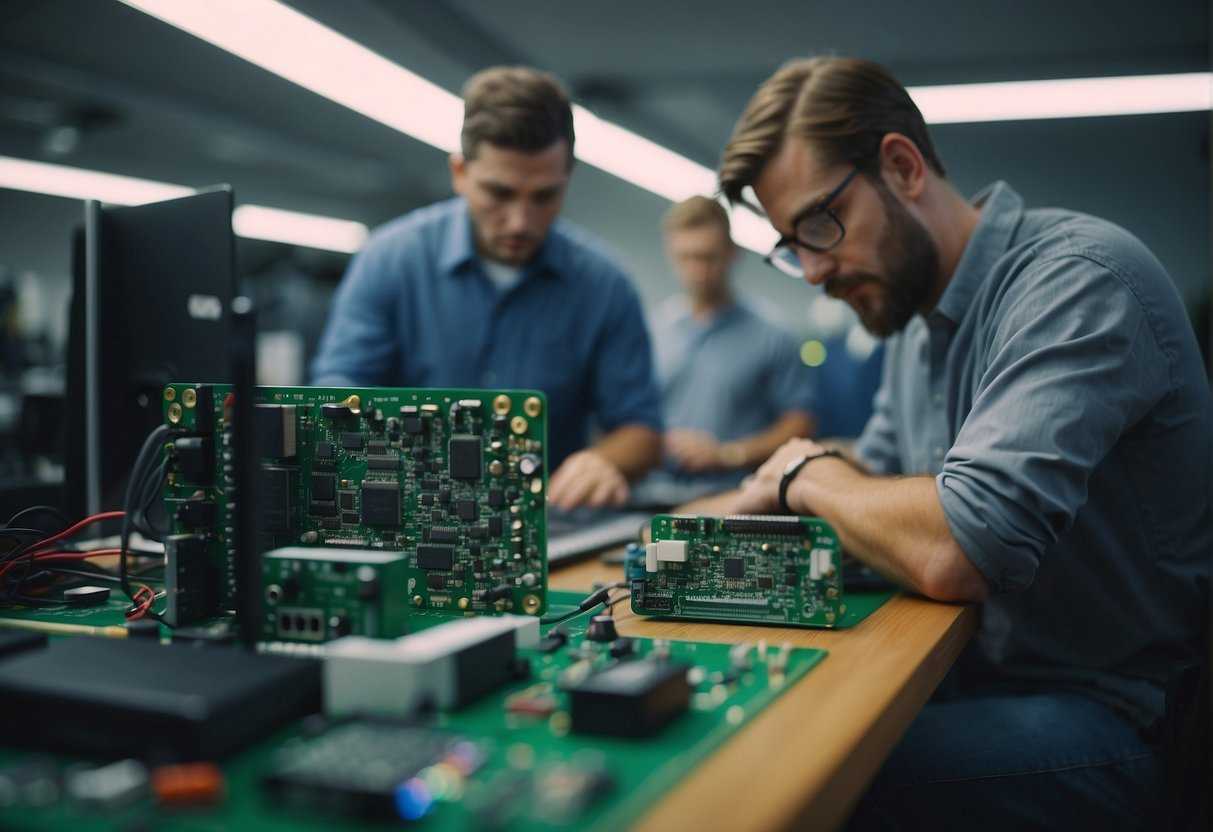
At CTA, we design dedicated electronics, starting from a single board to the development of complex electronic systems that find application in a variety of industries. In doing so, we always pay strict attention to the creative process, which starts with the initial idea and slowly transforms it into something concrete and tangible, up to the realisation of the first prototypes.
At the heart of all our electronic design work is the mission to provide the customer with the best solution, committing ourselves along the way to a brilliant collaborative experience.
In industrial electronics, design with a focus on assemblability ensures that a product or system can be manufactured or assembled through a simple, linear and easy process. This leads to a significant reduction in the complexity of the production process, which can be achieved by anticipating and solving in advance, during the design phase, any complex issues related to the assembly of the electronic product being designed.
The market for electronic components is often volatile and subject to frequent fluctuations, which makes the procurement processes for raw materials rather complex. Designing electronics with a focus on the availability of materials makes it possible to consider information relevant to the purchase and availability of the materials used and thus to opt for materials at the design stage that guarantee good purchasing conditions.
Our preferred approach: delivering results that aim to transform the industry or sector to which they relate. To achieve this ambitious goal, it is necessary to deploy wide-ranging expertise: the team that is usually assigned this kind of project consists of engineers, designers and user interface experts. In addition, these projects take between 12 and 24 months to complete, while ensuring full compliance with the agreed time-to-market.
The fusion of Industrial Electronics and Information Technology is incredibly powerful. The entire IOT system revolves around infrastructures, based on the Internet, that enable unprecedented levels of connectivity. Our approach to SCADA and digital HMI is proudly based on robust, modern and effective technologies. Cloud architectures, web or mobile applications and the latest trends in software development? We are at your side.
In our approach to electronic design, each phase is essential and meticulously detailed. Only in this way can we offer an excellent customer experience and an effective work roadmap for our team of hardware, firmware and software specialists.
Here is an overview of the phases we always observe, both for small projects and for larger, more complex ones.
At the outset, we take the time to carefully assess the customer's needs and requirements. This phase of active listening and close cooperation is crucial for laying a solid foundation for development. Through our understanding of the customer's perspective and our experience, we normally succeed in defining the project in precise terms, and consequently identify the best implementation strategy.
While we provide our technical know-how relating to electronics and industrial electronics, we also take steps to acquire knowledge relating to the specific project context. Customers are always very happy to participate in this phase by contributing their own know-how, and we are always ready to join forces!
We set clear objectives in terms of performance and reliability. At this stage, the project roadmap becomes official, final specifications are co-signed and everyone is officially committed.
Superior industrial electronics contain something we still call magic. Our good fortune? The fact that we have a team of experienced hardwarists, firmwarists and softwarists who really do wonders when they get down to business.
At this point, we take care of the internal validation of the project, ensuring that everything is tested and approved before prototype realisation.
At this stage we deliver the prototypes, almost always in person, because being with the customer and celebrating together the arrival of the first results is something very special.
The hardware is the component physical and structural device electronic devices, is the concrete foundation that supports the intelligence and logic of the system.
Firmware is a programme that consists of a set of low-level instructions, usually in C or C++, that brings the hardware to life and makes it capable of performing functions, providing feedback, monitoring parameters and even communicating with other devices. Normally, its role is to:
| Function | |
|---|---|
| Hardware | Supports and powers the main and peripheral electronic components. Hardware development starts with the definition of the printed circuit board, which may be single-layer or multi-layer and have different characteristics, and normally continues up to the burning of the circuit board. |
| Firmware | Interface for direct control of the hardware and platform for executing a complex and dynamic instruction set. Firmware development on microcontrollers involves writing code in low-level languages, ideal for precise control of the hardware. |
In general, the more the hardware and firmware development are in perfect balance, the more we see the creation of a coherent and high-performance electronic ecosystem.
Frequently asked questions about electronics design
To effectively realise the layout of an electronic circuit, we start with the circuit diagram and proceed with the addition and positioning of traces and components using CAD design software. In addition to ensuring the correct arrangement of components, we optimise the trace paths through circuit burning to minimise both noise and possible interference.
Generally speaking, when selecting components, attention is always paid to a number of parameters, including electric current, voltage, resistance, physical dimensions and, last but not least, compatibility with the rest of the circuit. The fundamental laws of electronics are of course the starting point to be respected in any context and application, after which in each project there are special requirements and considerations that guide our choices, ensuring not only the optimal functioning of the circuit but also the satisfaction of the customer's expectations.
There are actually many precautions that can be taken to limit the energy consumption of a board or electronic system. It is possible, for example, to select low-power components at the outset, to introduce power management firmware systems, and to design with efficient power logic from the outset.
Explore other services you can outsource to CTA Electronics.
Find out more about this service.
Find out more about this service.
Find out more about this service.
Find out more about this service.
Find out more about this service.
Find out more about this service.